Zsuzsa Szvetelszky
Researcher, consultant, lecturer, speaker and author - mapping formal and informal communications from the smallest villages to the largest organisations.

Main theme - The Social Psychology of AI
Many aspects of AI are currently under evaluation - but an essential question has not yet been raised: what will AI do with groups and communities?
65% of human communication is gossip - something AI is unable to process. Zsuzsa researches how will we be best able to utilize AI in the field of group communication.

Bio
Zsuzsa researches formal and informal communication:
from the smallest villages to the largest factories.She is a researcher, a consultant, a lecturer, a speaker and an author.

Media
One example of Zsuzsa's media appearances on RTL:
"The language of science is about facts, the language of conteos is about emotions."
For many other media appearances of her research and interviews - just scroll down to read!
Photos


Books and publications

Repair - How to fix broken objects, relationships and societies
More and more people believe that things have gone off the rails in the 21st century. Food waste has reached staggering proportions worldwide, while masses of people are suffering from hunger. Economic and technological progress has given rise to a society built around disposable products, and all of this is linked to inequality, the climate crisis, and natural disasters—all global problems that need to be addressed in every area of life. Instead of discarding broken devices, human relationships, or even entire systems, it would be worth considering the possibility of repairing them.

Hidden organisations (Hungarian: Rejtett szervezetek)
In our rapidly changing world, the characteristics of organizations, companies, and workplaces are also evolving. Informal communication within a company is a social phenomenon that is difficult to grasp because it is hidden and constantly changing.
It is often said that everyone has three lives: a public one, a private one, and a secret one. This is more or less true for organizations as well, and observing, recognizing, and describing hidden corporate processes, patterns, and conceptual frameworks in their natural environment is by no means simple.

Gossip (Hungarian: A pletyka)
"Finally, someone has taken the initiative and written about it properly! Because human ethology has long recognized that gossip is a form of communication that is a fundamental human characteristic. Animals do not gossip at all. Without gossip, modern societies would not survive...." Vilmos Csányi

Happy at the Workplace (Hungarian: Boldogan a munkahelyen)
Whether we work in an office or are professionals leading a hybrid work-from-home lifestyle, whether our work is intellectual or physical, we all have one thing in common: we don’t run the company, but we are part of its day-to-day life. The goal: to turn our workplace into a tool for our own personal growth—not just to survive within the company, but to use it as an opportunity.

Everyone is third (Hungarian: Mindenki harmadik)
"At the intersection of classical humanities and natural sciences, a new approach to human sciences is emerging, one that differs significantly from previous approaches in terms of both perspective and methodology, yielding many exciting and controversial results. I would include Zsuzsanna Szvetelszky's book in this category."
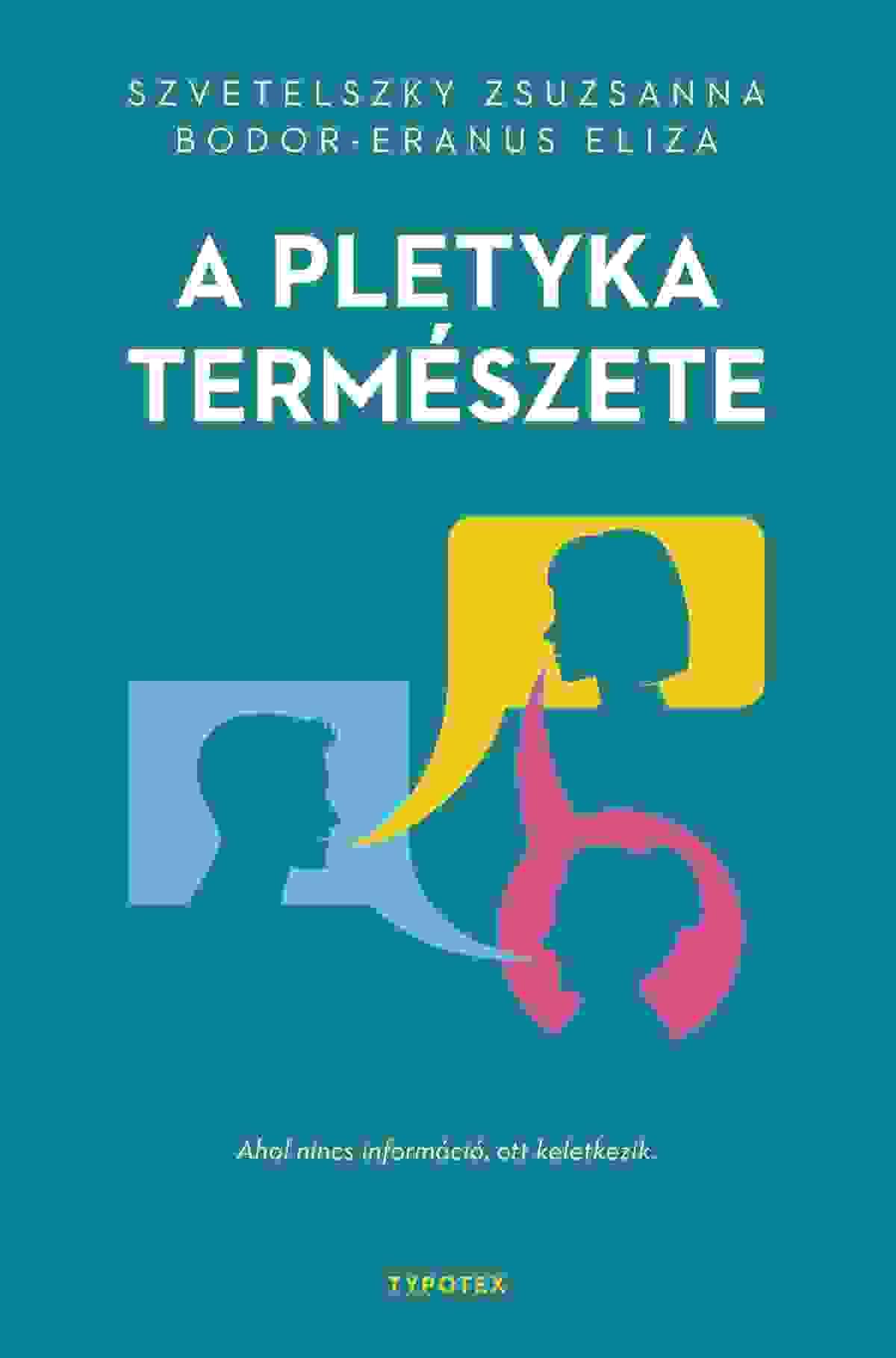
The Nature of Gossip (Hungarian: A pletyka természete)
Gossip hase always been a part of social life, but in the past it remained at the level of “word of mouth”—informal communication—among members of a particular closed community. Today, it’s such a commonplace phenomenon that if we look around the newspaper stand at a gas station, among the section headlines of daily, weekly, and monthly papers, we find not only words like “news,” “economy,” “finance,” “management,” “hiking,” etc., but “gossip” also appears quite frequently. In the digital world, the visibility of gossip has multiplied; with a single click, we can gain insight into the conversations of communities that are completely foreign to us.
Social